Friday, October 11, 2019

The Women Take the Floor (MFA)

Dropping Susan off at Mass Eye and Ear for a  check-up, I went by the Museum of Fine Arts, had lunch, and then visited the American Wing, third floor for a superb exhibit of female artists that had profound effects on contemporary art.  Here is a sampling.
Alice Neel, American, 1900-1984
"Linda Nochlin and Daisy" 1973


Left: Ruth Asawa, American, 1926-2013
"Unitled (S 407 Hanging Five-lobed Continuous Form within Form with Two Spheres" about 1952
Right: Kay Sekimachi, American, born in 1926
"Amiyose V" 1986  Woven nylon 6 monofilament


sorry, deleted title

Anni Albers, American (born in Germany), 1899-1994
""Dotted Weaving" 1959


Lenore Tawney, American, 1907-2007
"The Fountain of Word and Water", 1963


Olga de Amaral, Colombian, born in 1932
Strata II,  2007
Linen plain weave, gesso, acrylic and gold leaf


Georgia O'Keeffe, American, 1887-1986
"Fishhook from Hawaii No. 2" 1939


Louise Nevelson, American, 1899-1988
"Figure",1953-55


Rice Periera, American, 1902-1971
"Seven Red Squares" 1951


Lee Bontecou, American, born in 1973
"Fifth Stone (Black)" 1964
Lithograph


Elizabeth Murray, American, 1940-2007
"Undoing", 1989-90
Lithograph and etching on three-layered sheets of irregularly shaped paper


Toshiko Takaezu, American, 1922-2011


Grace Hartigan, American, 1922-2008
"Masquerade" 1954


Tuesday, October 8, 2019

Final China Blog: the Great Wall

Because of the cloudy, often dark days we had all week, Cheney hoped for some sunlight when we drove out of the city to the Mutianyu section of the Great wall, on my last full day in Beijing.   The sun came out, and we visited the wall, taking a bus up for quite a few miles, and then a cable car.  The wall here is from the 1300's, and this section is considered one of the most spectacular, with vistas to distant mountain ranges.
I have to tell you that Heather did not want me to do this, she was sure I would not be able to climb all the required steps, but I was determined.  And it was every bit as wonderful as I hoped.

The gate, the wall in the far distance.

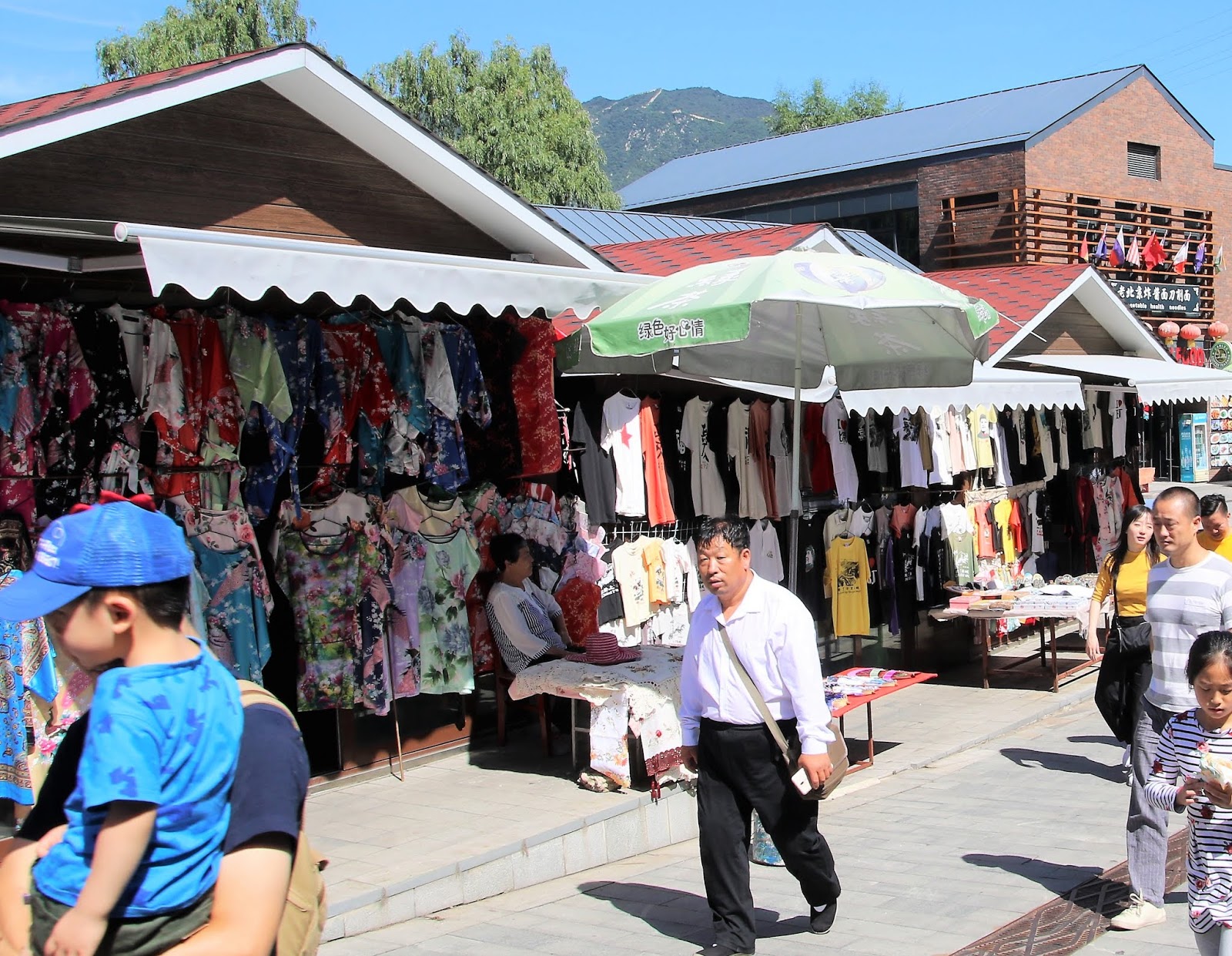
The long hot walk past innumerable souvenir stands to the bus terminal.

On the bus, passing that rarity for this trip, a private house.

Another long line for the cable car


And the first views from the cable car.


On top.


Walking down in order to walk pack up to the top and be on the wall.


Finally on top


Add caption


I wonder how the Forbidden City would have looked in all this sunshine. 
I guess I will have to go back and find out. 


And this is for you, Heather!

The line back to the cable car.

For your information, the translation for the Mandarin word for cat is
Mao.

The one and only rickshaw I saw the entire trip.  This one offered rides from the 
bottom of the bus drop-off up to the cable cars, about half a mile, all at a very steep angle. 
The guy must have had legs of steel.

More souvenir shops

Cheney faking it on a Guzheng

Final dinner before the flight out tomorrow, the hot pot, of course. 
That is Heather's parents in the rear. 
A trip of a lifetime that could not have happened without their help. 
What a wonderful gift. 

Monday, October 7, 2019

China Blog 9: Peking Duck, National Orchestra

Long before I left for Beijing, Cheney gave me an option of two concerts available the week I was there.  One was a classical concert played by a western-style orchestra, and the other was the National Orchestra, playing traditional instruments of China.  Well, what a no-brainer.  The National Orchestra was something I looked forward to from that moment. And we attended the concert in the National Performing Arts Center, the "Egg" as its known in Beijing.

The trip to the Peking Duck restaurant, 

I particularly like the architecture of this building. 

The Southeast Corner Watchtower, part of the 15th. century wall around Beijing, most of which is gone. 

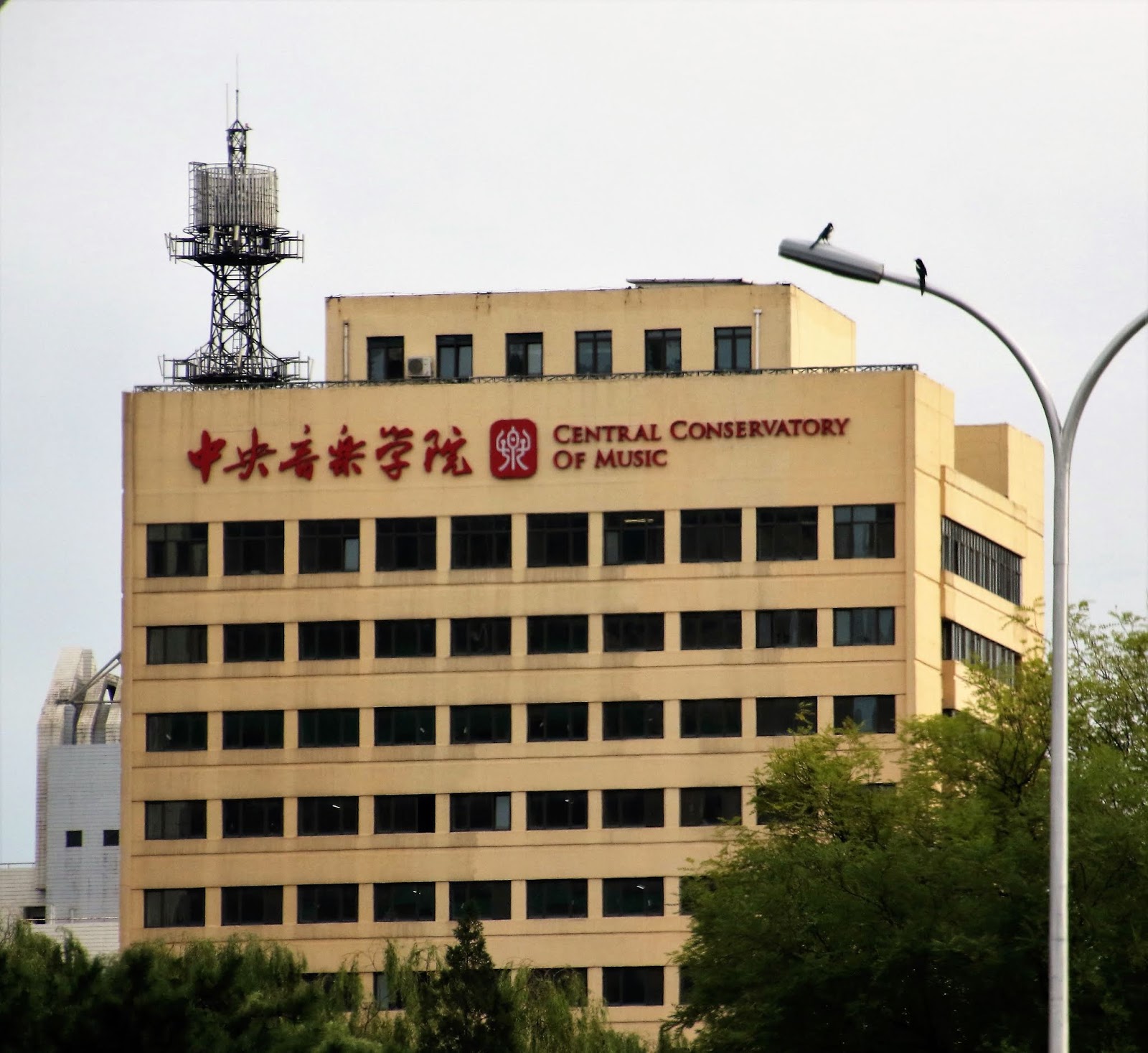
Central Conservatory of Music (Lang-Lang's alum)

The Peking Duck Restaurant.  
(the guide books all call this the Beijing Duck restaurant, but most Chinese still call it Peking Duck)

Belle  (I expect she will do something in drama!)

This is the most famous one of several in Beijing.  This one hosted, Nixon, Carter, Kissinger, among others.


Our table

The duck arrives on a cart, and the duck-chef (?) carves in front of us. 


Duck, fried skin, meatballs, veggies, all to be wrapped in a thin bread, like a tack. 
And then dipped in a fantastic sauce. 

Desert is a duck, filled with sweets. 

The meal, for the four of us, with a bottle of wine, cost about $70. (!!)

And off to the National Performing Arts Center, popularly known as "the egg"
Very controversial, when first palnned ("doesn't fit in", "not Chinese" "French architect?") but it is now
generally accepted to be a masterpiece. 

And it changes colors as you watch across the water. 


And, like everything in Beijing, monumental


And finally into one of the many performance areas in the "Egg".
Great sight lines (we had great seats), and wonderful acoustics. 

Yes, that is a huge pipe organ.
Going on line, I learned that the organ has a 64' stop called "The voice of the whale"


And here is the orchestra. The concert combined full ensemble, with a few chamber works.
Although the orchestra had a few celli and bassi, the remaining instruments were all classical Chinese instrument, 
found also in performances of Peking Opera. 
These include the Erhu, a two-string violin-like instrument with a soundbox traditionally covered with snakeskin.
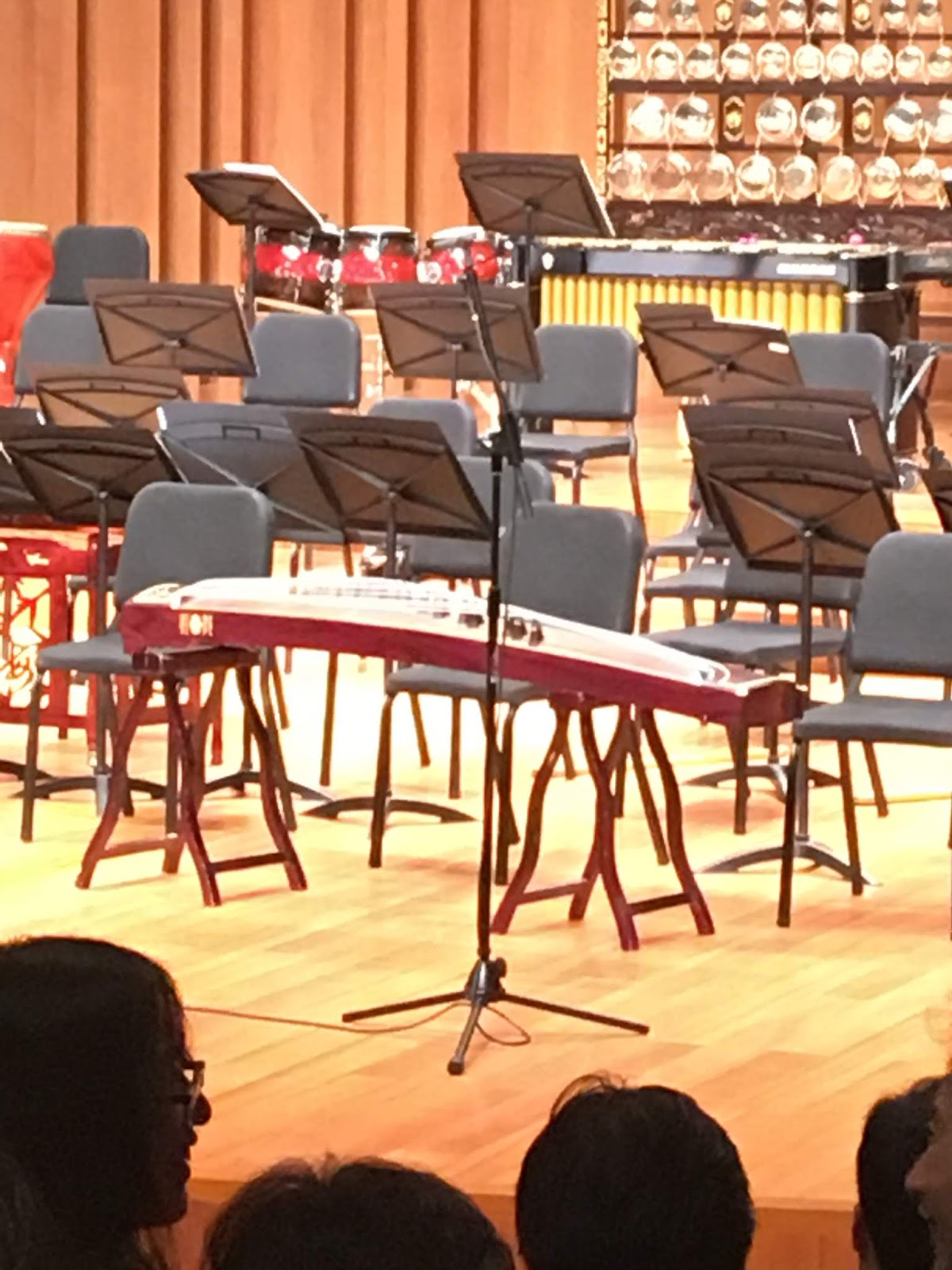
The Guzheng, an 18 to 23 string instrument that looks like a steel harp
the Pipa, a four-string mandolin-like instrument, that sounds remarkably like a banjo, but more melow
Dizi and Xiao, horizontal and vertical flutes, usually of bamboo
Suona, a trumpet-like instrument, but with a reed. Can be both beautiful, and raucous. 
And my favorite, the Sheng, a kind of mouth organ, bamboo pipes, and reeds.  I actually owned one, once. 


Guzheng


Two very celebrated Erhu performers. 


On the way home, passing the CCTV tower.  What you see, mostly is the enterior walls, you have
to look closely in the dark to see the actual building.